Uni-LaDiR: Latent Diffusion Unifies Multimodal Reasoning
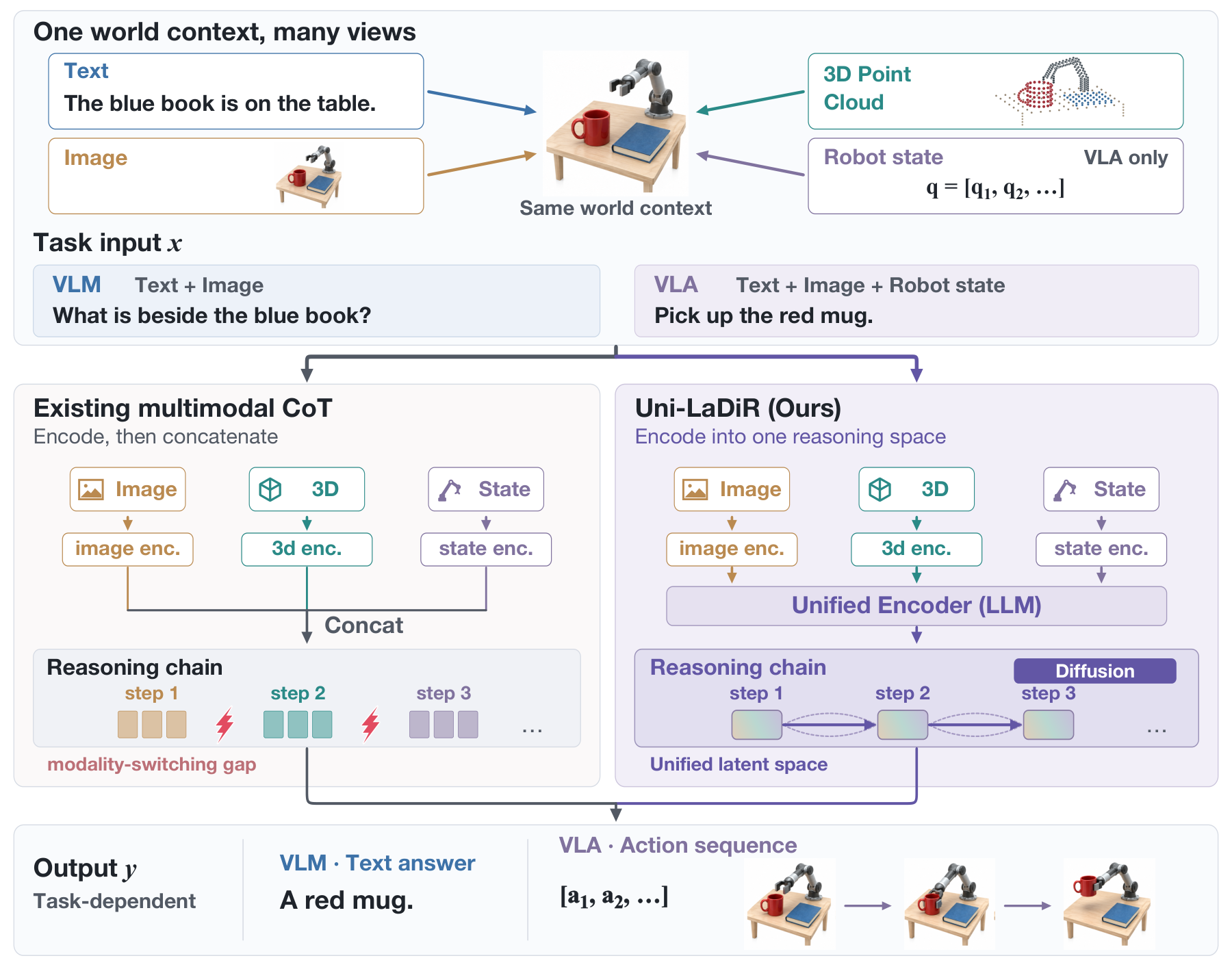
Learns shared thoughts from text, images, 3D point clouds, and robot states through continuation prediction. A jointly trained diffusion reasoner generates the thoughts at test time.
A research thread on continuous thoughts
Language lets a model explain its reasoning. But must every intermediate thought become a word? We study how models can reason in continuous latent states: how to learn useful thoughts, generate possible next steps, and improve them through feedback.
From generating and refining thoughts to learning from feedback and reasoning across modalities.
Learns shared thoughts from text, images, 3D point clouds, and robot states through continuation prediction. A jointly trained diffusion reasoner generates the thoughts at test time.
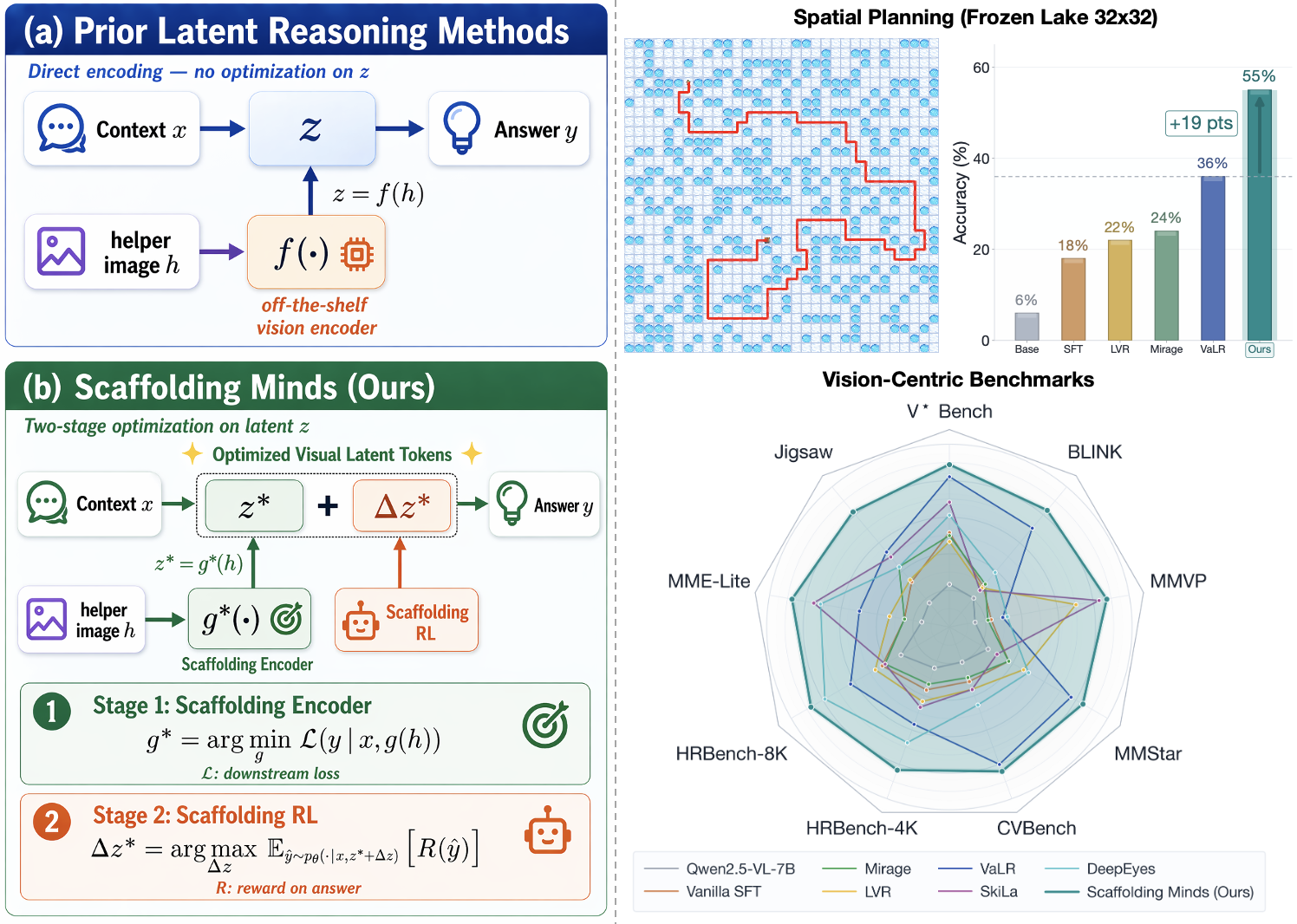
Learns a dedicated encoder for useful visual targets, then learns both the mean and variance of a latent sampler. Representation learning and exploration work together.
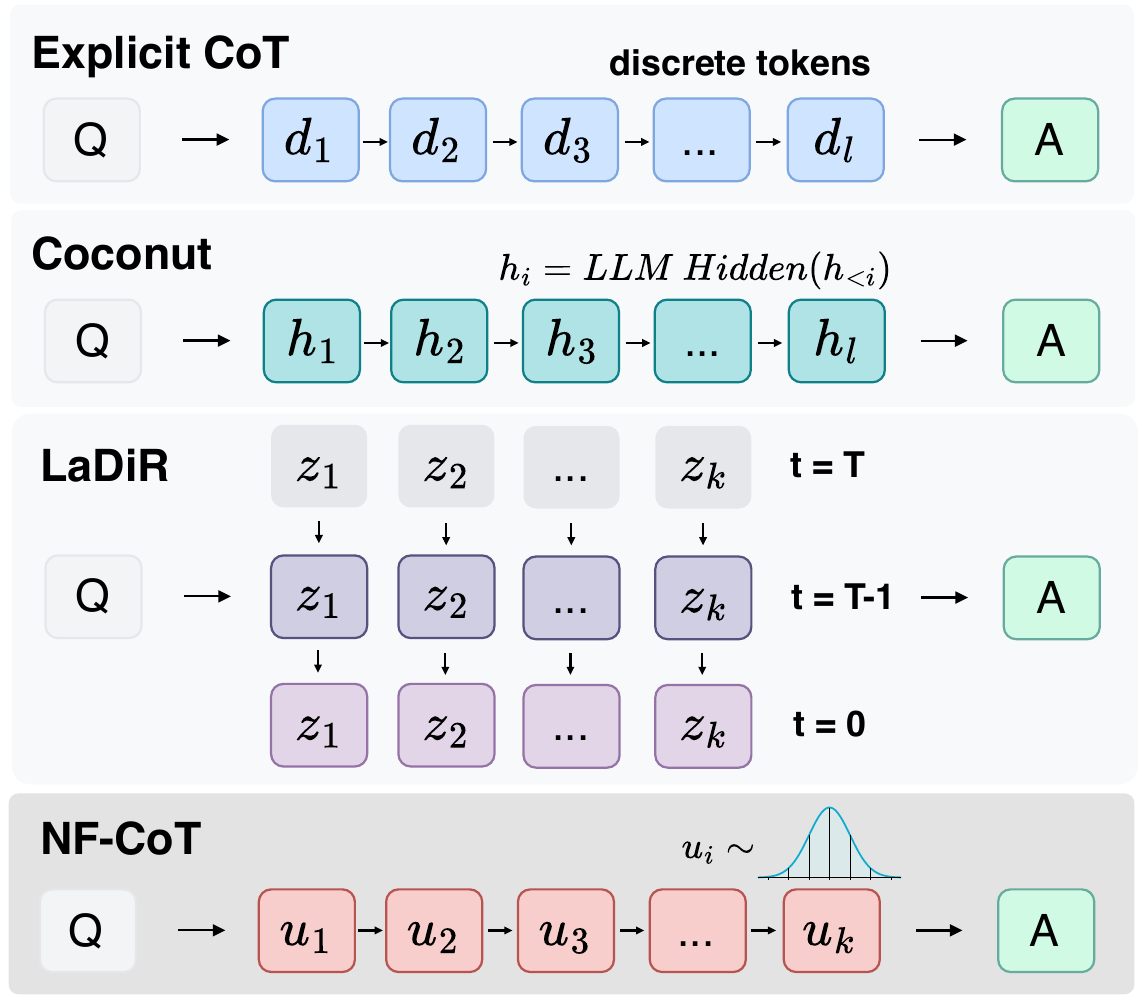
Uses normalizing flows to sample latent thoughts alongside text in a causal language model. Exact likelihoods and KV-cache decoding connect continuous reasoning to familiar language-model tools.
Pairs looped transformers with linear or sparse attention. Repeated internal computation refines memory and expands context access without requiring a new text token at each iteration.
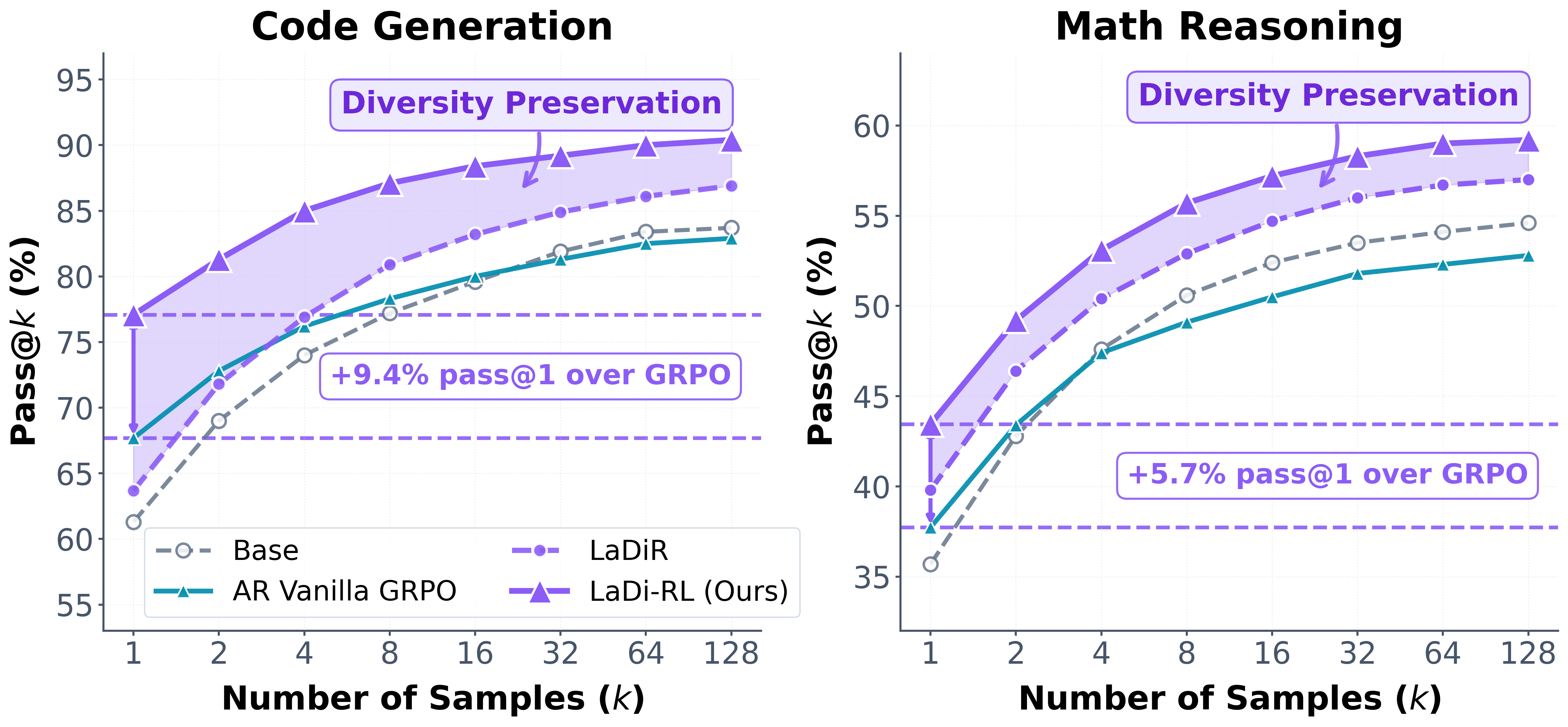
Optimizes a diffusion reasoning policy with reinforcement learning. Multiple text decodings of each latent trajectory help separate the quality of a thought from how it is expressed.
Compresses documents into continuous representations and trains retrieval and generation together. A shared objective ties the knowledge selected by the retriever to the answer the model produces.
Encodes text reasoning into compact thought blocks and generates them with diffusion. Iterative denoising gives the model room to refine a thought before continuing.
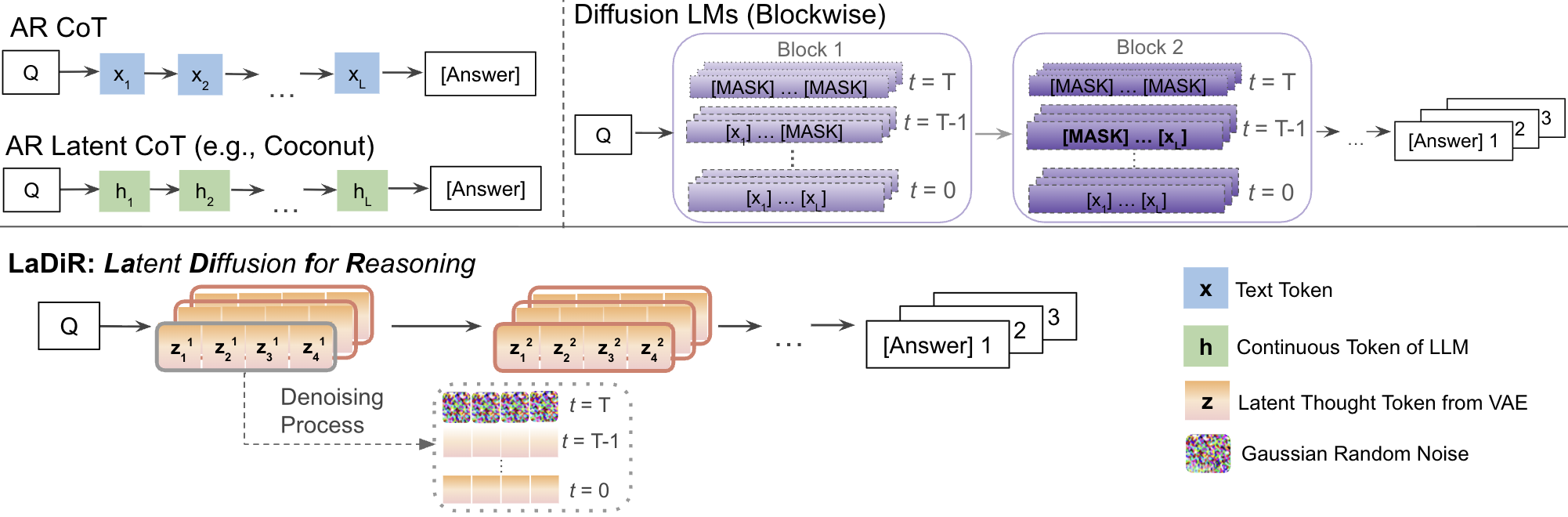
Combines diffusion over paragraph-level semantic representations with autoregressive text decoding. An earlier foundation for separating the generation of a latent plan from its expression in language.
A latent state can carry information before a model commits to words. Learning such states raises a connected set of questions: what information should they preserve, how can we generate a distribution of possible thoughts, and how can feedback improve the reasoning process?
The LaDiR series follows these questions from diffusion-based text reasoning to reinforcement learning and multimodal unification. NF-CoT explores probabilistic thoughts with normalizing flows. Scaffolding Minds learns visual targets and latent exploration together. Related work connects this direction to compressed knowledge and repeated internal computation.
This site brings together work by Murray Kang, Nikki Lijing Kuang, Yizhe Zhang, Yian Ma, Lianhui Qin, and their collaborators. Each paper credits its complete author list.